Showing posts with label inflation. Show all posts

Friday, 19 December 2008

Sales rise amidst the credit crunch


According to figures released by the Office of National Statistics (ONS), the volume of sales between September and November rose by 0.5% as compared to the three months before it. This may not sound good, but compared to all the doom and gloom and the difficulty of obtaining credit, it does sound good. Also, the value of weekly sales in November were 2.9% higher than in November last year.

However, the high street retailers beg to differ with the figures. The British Retail Consortium (BRC) said that the figures released by the ONS were optimistic and painted a "rosy picture" of the current difficulties. According to BRC's own findings, the sales value actually fell by 0.4%. Experian reported that the footfall (the amount of traffic generated by shoppers visiting the stores) in stores for the first three days of the week had decreased by 11.5% compared to last year.

It seems hard to believe that the increase in the volume in sales could have lead to a increase in the value of sales. After all, the increase in the volume of sales is largely due to a wave of heavy discounting by the high street retailers, especially after Woolworths slashed its prices to get rid of its stock. It is likely that the spectacular and well-publicised offers by retailers would have made some reluctant consumers go out and spend. It is also equally likely that many who generally would have waited for Boxing Day sales have instead done their shopping before Christmas since they feel that the discounts offer good value for money. After all, there is a limit to the amount of discounts that the retailers can offer before it starts eroding their profits. So many consumers may feel that the discounts are as good as they are going to get. If this is true, what would happen is that the average amount of sales during the Christmas period hasn't really increased, but the shopping has been concentrated to a few weeks before Christmas.

The reason for this difference in figures, according to Reuters, is that the figures of "the ONS figures capture internet shopping more fully". According to the ONS, the value of online sales was £220 million in November and it accounted for 3.8% of the total retail revenues. According to Experian, its company Hitwise which is an online competitive intelligence service, found that the websites of high street retailers had 22% more visits than its internet-only rivals. This could explain why the sales have increased even though the number of shoppers visiting the stores seem to have decreased.

Many shoppers percieve the prices of online retailers to be cheaper than their high street counterparts. And this has been shown to be true in most cases. After all, they do not have to worry about expensive overhead costs like rent and sales staff. However, many shops on the high street nowadays allow their customers to haggle and bag bargains, and this is not available to online shoppers.

It would be interesting to see the figures of the overall retail sales before and after Christmas since that would allow us to see the whole picture.

1&1 Webhosting

BizEasy

Tuesday, 16 December 2008

Inflation? Worry about Deflation instead.


It was announced today that the Consumer Price Index (CPI) fell by 0.4% from 4.5% in October to 4.1% in November. The CPI is the official measure of inflation used by the Government. The biggest factor for this fall is being attributed to the fall in crude oil prices. The average price of petrol was 95.2p. On the other hand, prices of fresh fruit and vegetables and non-alcoholic beverages is said to have risen compared to last year.

Although the drop is good news, the rate of inflation is still twice the official target of 2%. So, Mervyn King, the governor of the Bank of England put pen to paper and wrote a letter to the Government explaining why the rate of inflation had not hit the target. The governor of the Bank of England is required to write a letter to the Government whenever the rate of inflation is either 1% above or below the target and explain the possible action the BoE might take to solve it. However, Mervyn King feels that the next time he has to write a letter to the Government, it may not be about the reasons for inflation, but deflation instead.

Save Money on your Electricity Bill with uSwitch.com

What are Inflation and Deflation?

Inflation is regarded to be a bad thing since it means a rise in prices, which is a bad thing for shoppers. Then, deflation must be a good thing, right? In the short term, yes it is. In the long term though, its a dreadful thing. To understand why a drop in prices is such a bad thing, one has to understand the meaning of the terms "inflation" and "deflation" and its causes. Inflation is the general increase in prices or, it is the decrease in the purchasing power of money. There are two possible causes; either the cost of production has increased, like the cost of raw materials or labour, or demand is out stripping supply. Take for example a rise in price of a NintendoWii games console. This may be due to a rise in the cost of materials and parts and workers who produce it. Or it could be that the number of units available is less than the number of people wanting to buy it, so the price goes up. Around Christmas, it is likely for the latter to be true. It wouldn't be unusual around this time to find a NintendoWii on eBay at twice its retail price.

Deflation is the persistent decrease in prices. This happens when supply outstrips demand which could happen due to a surge in productivity. Or, like in the current climate, consumers rein in their spending which means that shops have to cut prices to entice customers to spend. If this happens a couple of times, it creates an anticipation of further cuts in the future. So, although consumers may have the purchasing power, they postpone certain purchases since they would be cheaper in the future. Its a self-fulfilling prophecy where consumers postpone their spending thinking that there would be price cuts, and sure enough, shops cut the prices to persuade shoppers to loosen their purse strings. Good news for shoppers, bad news for businesses. Businesses experience cash flow problems and their staff would have to accept a pay cut or even lose their jobs. So, debt becomes expensive because one owes the same amount of money, but has less income to meet it. Signs of deflation can already be seen on the high-street. Retailers are offering massive discounts, the likes of which are usually seen after Christmas, because they are desperate to clear their stock. And the consumers know this and know that further discounts will follow eventually.

It will be interesting to see how Mervyn King and the Government will go about coaxing the shoppers to spend their money.

All the latest phones FREE on T-Mobile exclusively online
BizEasy

Friday, 12 December 2008

Cool to be Frugal


According to Andy Bond, the Chief Executive of ASDA, its now becoming cool to be frugal and not so cool to be frivolous and wasteful. He feels that consumer's shopping habits are changing and a new generation of shoppers who are thrifty are emerging as the credit crunch begins to bite even further.

So what does this really mean? It means that consumers will now focus more on products that offer them value for money and will aim to eliminate waste. Value for money doesn't really mean something that is priced less or discounted. It is actually something that offers satisfaction and quality for its price. Consumers will increasingly try to differentiate their "needs" from their "wants" and think carefully if they really need something or do they just want it. For example, ASDA noted that consumers are beginning to shift from buying ready meals to buying ingredients and cooking at home. People are also beginning to mend or fix items rather than getting rid of them and buying new ones. Cobblers, for example, have seen their business increase since consumers are coming in to get their shoes mended rather than splashing out on a new pair. A quick search on Google Trends showed that visits to the comparison site moneysupermarket.com and myvouchercodes.co.uk which lists voucher codes across a variety of stores had more than doubled.

What's really interesting is the 40% increase in the number of people who are ignoring best-before dates and consuming the product rather than throwing it in the bin once it is past its sell by date. Perhaps the increase has also something to do with the numerous reports on saving money on television featuring people who regularly consume food, as long as it looks fit, well past the best before date. Consumers are also freezing leftover food rather than wasting it and sales of bottled water and smoothies has also been said to have decreased since many are opting to fill tap water and eat fresh fruit instead.

It is important then that retailers spot this trend and adjust their business models accordingly in order to survive the downturn. Thrifty consumers would focus on long term value and would be willing to spend a little bit extra on an item that is likely to last longer than buy something cheaper in price which would also be cheaper in quality and hence not last as long. Rather than reducing prices on cheap Christmas stocking fillers that perhaps wont even last till next Christmas, retailers should instead focus on reducing prices on items that actually are of some use to the consumers. Also, thrifty consumers are less likely to buy items on impulse which retailers greatly depend on. So, businesses should make sure that they are really operating on a low cost model which aims to eliminate waste as that would be the only way that they would be able to offer low prices and good service at the same time.

AVG Internet Security offers Anti-Virus, Anti-Spam, Web Protection & Firewall - comprehensive protection for your PC. Get protected

Tuesday, 9 December 2008

HSBC to increase its lending


The World’s Local Bank HSBC announced on Monday that it aimed to lend next year roughly two times the amount it lent to homeowners in 2007. For this purpose, it has set aside around £15 billion. In an environment where banks are becoming increasingly reluctant to lend money, HSBC hopes to increase its market share by lending, thereby getting a huge slice of a, albeit, small market. It is also hoping that its customers will continue to bank with it even when the climate improves, because they will remember that HSBC was there for them when all the other banks closed their doors. This will mean that when the market does get bigger, they will effectively have a huge slice of a huge pie.

So, how can HSBC afford to increase its lending when other banks have had to be injected with capital by the taxpayers. HSBC is one of the few banks thathasn't gone to the taxpayers cap-in-hand asking for a cash injection, it is in fact well capitalised, according to its CEO Michael Geoghegan . According to its spokesperson, HSBC doesn't have to depend on the two main sources of finance that the banks that were bailed out depended on- the money markets and UK depositors. It will instead fund it internally using its reserves. The reason why other banks are lending less money is because they don't have enough money to lend.

Find. Compare. Save. at Kelkoo.co.uk Click here

It is true that last Thursday the MPC (Monetary Policy Committee) cut the base rate by 1% to 2%-the lowest it has been for years. However, the primary source of finance for most banks is not by borrowing from the Bank of England, but from the money markets. The rate of interest in the money marketshasn't gone down at the same rate as the base rate. Hence, the cut in the base rate is unlikely to make the cost of borrowing money any cheaper. Another source of finance for banks is their customers' deposits. However, in recent years, the levels of savings in the UK is said to have decreased. The cut in savings rate by the banks is unlikely toentice people into put their hard earned cash into banks, except for those whom the interest paid is their income.

HSBC also announced a £1 billion fund for lending to small businesses. Small Businesses that are fundamentally sound and only experiencing cash flow problems are the kinds of businesses it is hoping to lend to. The reluctance of banks to lend to sound businesses has been it the news recently, forcing numerous businesses to cease trading just because they have a cash flow problem and not because their business model is fundamentally flawed. The increase in the number of small businesses going bankrupt no doubt puts the jobs of many people at risk and leads to fear amongst those that are in employment. Small business owners, no doubt, will welcome this announcement which will be akin to a lifeline being thrown at them when they are in dire straits.

It has stressed, however, that the lending criteria will still be strict. In other words, they are not planning to throw money at anybody who asks for it.

Even if this announcement does not completely restore confidence, any good news is welcome in these gloomy times. It is unlikely that any other major bank will come forward and increase its lending in the near future, no matter how much Brown, Darling orMandelson threaten or cajole them into doing so. In a way, one cannot blame the banks which have been bailed out for being reluctant or in their words, "careful", of lending. On one hand, they are the subject of many a joke and their "irresponsible" lending is being blamed for all this mess, and on the other hand, they are being pushed to lend at levels of last year.The money which has been lent to the banks on behalf of the taxpayers has not come cheap, the banks have had to pay a hefty price for it.

Tuesday, 2 December 2008

Retailers embrace VAT cut

The cut in the VAT announced last week by the Chancellor initially didn’t receive the reception that he might have been perhaps hoping for. News reports, newspapers and websites were filled with comments against the idea of the VAT cut, some being funny, and some downright ironic. Most were along the lines of “10p saving! Whoopee!”

However, over the weekend, it looks like many retailers are whole-heartedly embracing the VAT cut. Not because they like to go through the trouble of having to change the prices and labels and the IT systems. But because it gives them another reason to slash their prices, much more than the 2.5% VAT cut. But, why do they need a something like a VAT cut to give them a reason to slash prices? Surely, they can do it without that.

Yes they can. And many, like M&S and Debenhams, did a fortnight ago when they had a one-day only “spectacular” sale. Having yet another “spectacular” sale nearly three weeks before Christmas would give the impression that they have a lot of left over stock which they are desperate to sell. Although many shoppers would flock the stores to bag the bargains, which many have been doing due to the ongoing sales, many would stand back and wait for the prices to drop even further – a clear sign of deflation.

Hence, the cut in VAT, although not significant on its own, has provided the retailers with a timely reason to slash their prices further, using the VAT cut as a “mask” for doing so. Some companies, however, like BT and Virgin Media have decided to pass only the 2.5% cut to their customers.

But, how do single price retailers like Poundland, 99p Stores, or numerous other independent single price retailers pass on the VAT cut to their customers? After the VAT cut, an item costing £1 would then cost:
117.5% = 100p (The VAT is already added to the final selling price)
1% = 0.85p
115% = 97.87p (new price)
Poundland wouldn’t be able to rename itself as 97pLand for a period of 13 months, and the slogan “Everything’s £1” would then be deemed misleading. The only other option is for such businesses to increase their profit margins, which is not a bad thing, but they cannot take the advantage of being able to advertise the fact that they are passing on the VAT cut to their customers. Or, they could sell products that they wouldn’t have been able to in the past, as it would’ve been priced above £1, but can now since the cut in VAT allows the price to be £1.

http://www.bizeasy.wordpress.com/

Friday, 28 November 2008

Woolworths goes into administration


The high street retailer Woolworths, fondly known as Woolies, has been forced to go into administration after it failed to find a buyer to snap it up for a nominal £1. So, why didn’t anybody buy it, surely £1 for a whole company seems like a bargain? That’s because the buyer would have not only acquired Woolworth’s assets (things it owns), but also its huge liabilities (money it owes), £385 million to be exact.

So, what is administration and when does a business go into administration? With regards to business, it is when a business doesn’t have enough funds to trade, also known a cash flow crisis. Cash flow is not the same as profitability of a business, but refers to the cash flowing into and out of the business. If cash coming in is less than the cash going out, then the cash flow is negative and it means that the business does not have enough funds to meet the current liabilities, like creditors and suppliers.

Up to 50% now on at House of Fraser – click here to shop

However, going into administration isn’t still the end of the story for Woolworths. In fact, administrators, in this case the accountancy firm Deloitte, protect the company from creditors seizing stock to pay off the money that is owed to them. The administrators are trying to find a buyer for Woolworths, failing which it will be forced to go into liquidation. This is where the administrators try to sell off the assets to recover any money they can to pay off the debts. Woolworths competitors are dreading this because although it will mean less competition in the long term, since there is one less player in the market, in the short term, it will mean a price war during Christmas as the administrators will slash prices to sell off all the stock.

So, is the reason for Woolworth’s difficulties due to the credit crunch? Well, the increase in household bills has meant that consumers are spending less. This is evident from the fact that Woolworth’s like-for-like sales have decreased whereas their costs have increased leading to increased losses. Many analysts say that Woolworth’s difficulties should come as no surprise, as Woolworths didn’t have a clear brand image, what its brand stood for, and its purpose in the market. Additionally, suppliers of Woolworths found it expensive to insure themselves against the risk that it wouldn’t be able to pay them and hence, Woolworths had to pay upfront for the supplies, unable to take advantage of buying on credit that some of its competitors enjoy.

Woolworths has around 815 stores and employs around 30,000 employees. If the business does go into liquidation, all these employees stand to lose their jobs. Also, the businesses that supply to Woolworths will also suffer losses. The question many people are asking is why isn’t the Government bailing Woolworths out, after all, it did bail out the banks. Well, the Government can’t bailout every business in difficulty; it’s a natural business process where the one with the weakest business model fails hence making the others stronger due to decreased competition.

Other than its retail business, Woolworths Plc. also owns Entertainment UK and 2Entertain. Entertainment UK specialises in the supply of CDs and DVDs to retailers such as Tesco, Zavvi, W H Smith, Asda, Sainsbury’s, Morrisons and of course Woolworths itself. EUK is said to be a profitable business and the administrators are looking for a buyer for it as well. If EUK is shut down, it will no doubt affect the retailers it supplies, especially during the crucial trading period of Christmas. BBC Worldwide and Woolworths Plc., on the other hand jointly own 2Entertain, and there are talks of BBC Worldwide buying Woolworth’s share of the business.
It has also been reported that MFI is also going into administration, and it looks like a few more will follow, certainly after Christmas. If you want to see Woolworth’s Interim report for 2008, click here.


Tuesday, 25 November 2008

First the Chancellor giveth, then the Chancellor taketh away.


Yesterday, the Chancellor Alistair Darling announced in his Pre-Budget Report the much talked about 2.5% cut in the VAT, bringing it down to 15% from 17.5%. In the same breath, he also announced an increase in income tax for those earning £140,000 and above. From April 2011, people falling into this income bracket will have to pay income tax at the rate of 45p.

The cut in VAT is to come into effect from the 1st of December. This leaves ample time for businesses to revise their prices and change the all the labels in the stores, but at the same time, being just in time before the Christmas shopping.

So, how will the change affect the prices? Will a loaf of bread or a bunch of carrots be any cheaper? No, because food products do not attract VAT. Surely, utility bills as a result will go down. Sadly, no because the VAT on utilities such as gas and electricity already have a lower rate of VAT charged at 5%. A cut of 2.5% doesn’t look as if it will make a huge difference in prices, especially compared to the generous 20%, 35%, 40% discounts offered by the retailers already.

To find your cheapest energy provider click here.

Then, the motive behind the cut is to give confidence to the consumers to go out and spend. But, confidence cannot be used to pay for a brand new PlayStation 3, can it? You need something else, namely, money. The primary reason why people are spending less money on the high street is because they have very little surplus left over after paying the high utility and food bills. And those who have enough surplus choose to save it for a rainy day.

That’s because it’s almost impossible to see a news report nowadays without it mentioning yet another company announcing job cuts. This creates uncertainty among those who are employed about the security of their jobs. Those who have recently been made redundant have no choice but to save money. But those who have a job also save since they don’t know how they are going to put food on the table next month or meet their mortgage repayments.

Another thing that’s hard to miss in a news report is an interview with the boss of a SME (Small & Medium Enterprise) business who has been denied a loan from his bank, or has had his overdraft facility cancelled. This leads to cash flow problems which means the business cant pay its staff, pay its utility bills, or even buy raw materials to maintain production. In addition, creditors, who owe money to the business, are unable or reluctant to part with their money. As a result, staff numbers have to be cut down adding to the number of unemployed across the country.

How can such news create confidence?

Perhaps, the Chancellor should look at reducing the VAT temporarily on utilities, or even get rid of them for the time being. More importantly perhaps, he should make sure that SMEs, who are perfectly healthy, should have access to loans and overdrafts at a reasonable cost to maintain their cash flow. After all, the SMEs are not asking for charity, just for funds which they are prepared to pay back with due interest. It makes sense for the Government to ensure that businesses that are perfectly sound to not go bankrupt just because they do not have enough cash or credit to meet their current liabilities. After all, the SMEs employ a lot of people in the private sector of the economy and contribute to the Treasury in the form of National Insurance and Corporation Tax. Since people are employed, it saves the Government the trouble of have to pay job seekers allowance, hence reducing its outflow.

So, it is perhaps job security and income security that will encourage the consumers to go out and spend, as Alistair Darling and Gordon Brown along with countless retailers are eagerly hoping, fingers crossed.

But it seems highly unlikely that the cut in VAT will have the intended purpose of instilling confidence among the consumers and going on a spending spree, but for the sake of the economy and the countless people who are unemployed, lets hope its not all in vain. The high earners are certainly hoping for it, since they are going to be paying for it, come 2011.

http://www.bizeasy.wordpress.com

http://www.moolanomy.com/998/money-hacks-carnival-39/

All the latest phones FREE on T-Mobile exclusively online

Wednesday, 12 November 2008

Profits at Starbucks go Skinny Latte


Profits for the coffee chain Starbucks fell by 97% in the fourth quarter to $5.4 million, as compared to $158.5 million this time last year. Although the sales revenue were up 3% to $2.52 billion, like for like sales actually decreased by 8%.

This shouldn’t really come as a surprise then since consumers are cutting back on what they deem “luxuries” and are more cautious about their spending and are literally watching their pennies. Starbucks is perhaps well known for its high prices as much as it is for its coffee. Its share price dropped by 3% after the news broke out and was trading at $9.91. Last year, it would have been worth around $20-$30.Starbucks said that it has seen a decrease in customer traffic, in other words the number of customers visiting its branches, and also, crucially, the value of each transaction per customer. So, it is likely that the increase in sales revenue is likely to be due to the increase in prices.

Although drinking coffee is one of life’s little pleasures, its prices in the cafés are anything but little. A cup of coffee for $4 or £2.50 may seem insignificant on its own, but multiply them up for every working day of the month and you are left with a sizeable figure. Starbucks could lower its prices, but it is seen as a premium brand and would as a result devalue its brand value. Think of Marks & Spencer’s food range competing on its prices with Tesco’s Value range or Sainsbury’s Basic range and you get the picture about devaluing the brand value.

It’s likely that other coffee chains like Café Nero and Costa Coffee would now be worried about their own situation while the likes of McDonald’s will be rubbing their hands with glee at the prospect of attracting coffee drinkers with their cheap prices. McCoffee anyone?

Monday, 27 October 2008

Drop in oil prices, but don't be happy just yet.

Prices of crude oil dropped from a peak of $147 a barrel in July to below $60 a barrel today. This drop in oil prices has sparked off a price war between, you guessed it, UK’s top four supermarkets-Tesco, Asda, Sainsbury’s and Morrisons. After trying to fill up cash strapped consumer’s shopping carts, they are now trying to fill up their cars. Prices of unleaded petrol fell to just under £1 per litre. The recent fall in the prices is due to the fear that the sharp increase in prices is likely to lead to a fall in demand and hence a fall in revenue.

However, this drop in prices is likely to be short lived. This is because OPEC (Organisation of Petroleum Exporting Countries), a cartel of oil producing nations, announced in the wake of the recent drop in prices that they would cut the production of oil by 1.5 million barrels a day by next month since they fear that their revenue will decrease because of the drop in oil prices. This, they hope, will lead to a decrease in supply and since the demand of petrol is likely to go up due to the decrease in prices, it will ultimately lead to an increase in the price of oil, which some experts estimate to be around $80 to $100 per barrel.

 www.easyCar.com low cost car rental online

Although it is immoral and unethical, the oil producing nations, in a way, have made a smart move by coming together and working for a common interest, i.e., to make as much money as possible, rather than against each other. Working together ensures that they can control the amount of supply of oil and hence also the price we pay. Oil is by all means almost a necessity which means that the demand is price inelastic; this means that the change in price does not have a huge impact on the level of demand. People still have to fill up their cars to go from A to B, transportation firms still have to fill up their trucks to transport goods and so do buses, trains and airplanes. Also, petrol and diesel have no real alternatives.

However, in a recession, demand is likely to be price elastic, which means that demand is sensitive to the price. So, the move to cut production may lead to a fall in supply, but the increase in prices might also lead to a fall in demand, which would give counterproductive results to what OPEC hope.

Cartels formed by companies are against the law, otherwise we would not have competitive prices and certainly no price wars between supermarkets since they would be busy colluding with each other and fixing prices.

www.abebooks.co.uk - Used and out-of-print books

The value of Pound (£) has been falling against the Dollar ($). The benefit of this is that it makes UK businesses very competitive in foreign markets and allows them to import their goods at a competitive price. The flip side of this is that it increases the cost of importing raw materials of which oil is a part. It is likely that even this will increase the price of petrol and diesel we pay at the fuel station.

So, there is no reason to be happy about the drop in fuel prices since it is only temporary and more of a Christmas offer than a real deal.

http://www.bizeasy.wordpress.com

Wednesday, 22 October 2008

Keynes way of kick starting the economy


Argos Logo 120x60
Home Retail Group, the company that owns the DIY store Homebase and retailer Argos, reported a loss of £450 million in its half-year operating profit. The reason for this loss is attributed not only to consumers restricting their spending, but also the weakening of the Pound which means that it costs more to import products from other countries, add to that the increase in the cost of raw materials, production and transportation. Products that are seen as a luxury have seen their sales and consecutively their profits drop as consumers switch to cheaper value-for-money products. Budget stores, as a result, have seen their sales and profits increase rapidly, in cases like Poundland, even double.

However, a drop in sales at Argos, which is not exactly an upmarket store, should create a little more than just a flutter amongst businesses operating in similar sectors. This is because it suggests that not only have consumers changed their shopping habits and switched to cheaper stores, they have stopped spending altogether on items they deem unnecessary. There are concerns about unemployment as many are worried that they would lose their jobs. The utility bills and mortgage repayments are rising. All this creates an atmosphere of uncertainity and leaves people preferring to save any surplus rather than spend it as they did before.

According to John Maynard Keynes, a well-known British economist, who lived during the Great Depression of the 1930’s, the only way to give the economy a kick-start, is to spend and spend and spend. This is because a recession is caused by a fall in demand, not by the fall in supply. Demand has fell quite a lot recently because the credit that backed it no longer exists. Although Governments around the world have injected banks with capital, banks in turn have effectively turned off the tap of credit. Keynes believed that in the event of consumer spending decreasing, the Government should maintain or even increase its spending rather than cutting back. The people employed in the sectors where the Government spends its money would in turn spend their wages benefiting the local businesses who in turn spend and make investments and that gets the whole economy moving again. That way, a downward spiral of recession could be turned into an upward spiral of growth.

Alistair Darling, the Chancellor of the Exchequer, is adopting Keynes’s ideas. He said that the Government would increase its spending on large scale projects. In the long term, it means increasing the national debt as the Government has to borrow money to keep up its spending. So be it. Keynes said that Governments should think of the short term, because, as he put it, "in the long run we are all dead".

http://www.bizeasy.wordpress.com

Wednesday, 15 October 2008

This isn’t just any gas & electricity; this is M&S gas & electricity


Marks & Spencer announced today (15 Oct) its partnership with Scottish and Southern Energy to launch its new offering- M&S Energy. Customers can sign up in store and online through www.mandsenergy.com which goes live on the 27th of October. M&S plans to reward their customers by offering them M&S vouchers when they sign up, reduce their energy usage or opt for paperless billing. It is relying on its strong brand name to attract customers. However, since M&S is regarded more as an upmarket brand, it is unlikely that people will switch to M&S initially since it will naturally be perceived to be more expensive than its competitors.

Offering vouchers rather than a discount on the bill itself is an interesting way of making people sign up and shop at M&S since shopping at M&S is the only way to redeem the vouchers. This would lead to a rise in sales for M&S, who has seen its sales drop-M&S style, and would ensure that the money stays within the organisation. This is because if you get a £10 voucher, M&S is not actually spending the £10, but the voucher is worth £10 that can only be spent at M&S. This is different to it giving you £10 discount on your bill that it does have to spend and since you are free to spend it anywhere you choose, M&S might not benefit from it. It will be interesting to see if other stores, like Britain’s Biggest Discounter, Tesco, will join M&S to offer gas & electricity to its customers.

Further reading:
M&S Corporate Website: http://corporate.marksandspencer.com/media/press_releases/company/pressrelease_mandsenergy

M&S Sales:
http://business-easy.blogspot.com/2008/10/m-weather-forecast-bleak-in-britain.html

http://www.bizeasy.wordpress.com

Tuesday, 14 October 2008

£37bn Bank Bailout

The UK Government announced on Monday (13 Oct) that it was going to lend £37bn to three of UK’s biggest banks with the aim of “unfreezing” the frozen credit market. The Royal Bank of Scotland (RBS) will receive the biggest cash injection worth £20bn. The Government will buy £5bn worth of preference shares and another £15bn worth of ordinary shares in RBS if they are not bought by ordinary investors, which will give it a healthy 60% share of the business. HBOS and Lloyds TSB will jointly receive £17bn in return for which the Government will receive approximately 43.5% of the merged business. Preference shares, as the name suggests, are given preference when it comes to paying dividends. This means that the Government will be paid the dividends, if there are any, before they are paid to the ordinary shareholders. It also means that the Government will have a say in the operations of the banks.

Although this announcement would have lead to a sigh of relief for some since the banks will get the cash injection they desperately need and give them stability, many investors are worried that the purchase of a huge number of shares by the Government will lead to a dilution of shares of the existing shareholders. Dilution basically means that since the total amount of shares of the banks will increase, this will mean that the existing shareholder’s ownership of the company in terms of percentage will decrease.

There has been support and opposition to the bailout plan proposed by the UK and American Governments. Many people are angry that taxpayers’ money is being used to pay for the mistakes of a few irresponsible bankers especially since most of the bankers got bonuses and left the general public to clear up the mess. However, the bailout is a necessary evil. This is because the credit crunch ultimately affects all of us. If banks are reluctant to lend to each other, it means that banks cannot lend to the general public, which means that the general public cannot spend this money which affects local businesses, this leads to a loss of jobs and goes on and on like a downward spiral. There have been reports recently that many small businesses have seen their overdraft facility severely reduced of even cancelled in certain cases. This has affected their cash flow. Businesses that were sound a month ago are finding it hard even to pay their staff.

The Economist (http://economist.co.uk/) described the lack of credit in an interesting manner by comparing it to air. We always take the air we breathe for granted because it is readily available. When we start drowning, we suddenly realise the true value of air because the lack of air hurts. Similarly, when credit is flowing, everything runs smoothly. However, the lack of credit leads to a lot of problems. The bailout plan is not a silver bullet that will solve all the current problems, but it remains to be seen what effects, if any, it will have in the near future.

The BBC website has an interesting article about past bailout plans and whether they worked. The link can be found below.

Have bailouts worked? http://news.bbc.co.uk/1/hi/business/7648330.stm

http://www.bizeasy.wordpress.com

Monday, 6 October 2008

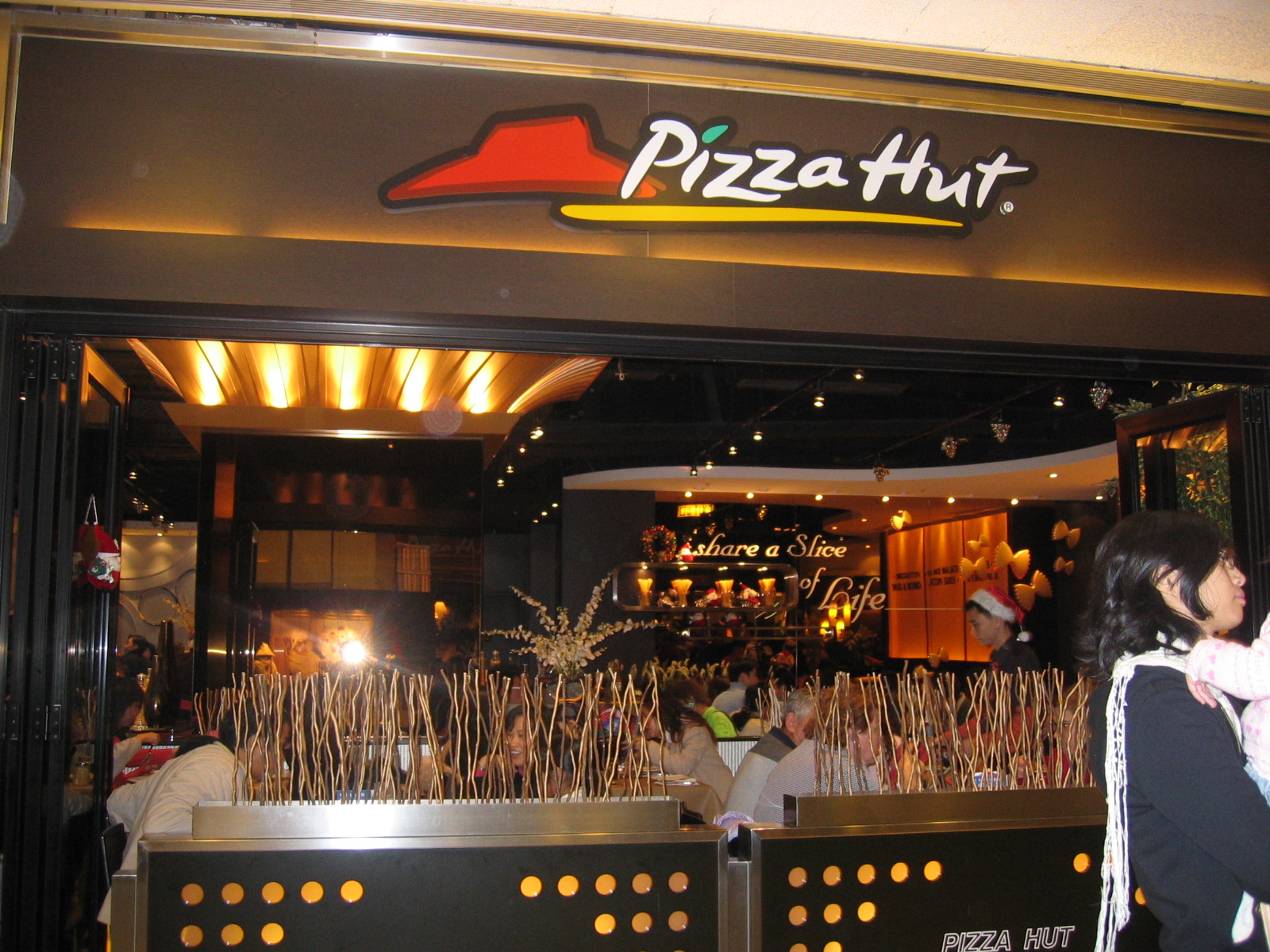
"Pizza Hut" gets a healthy makeover


Pizza Hut, famous for its pizzas (no prizes for guessing), is launching a new healthier menu which is to include pastas. As a part of this revamp, 30 of its branches in the UK are to be re-branded to "Pasta Hut", for the time being atleast, to reiterate the point that it is going to sell pastas. This re-brand is expected to cost £100m and will last 6 years. Pizza Hut has over 700 franchises in the UK and the first one opened in 1973, over 35 years ago. They hope that this move will help put the brand a upmarket position with a sophisticated and chic atmosphere that will clearly give it an edge over its competitors.

It seems that Pizza Hut is trying to attract health conscious middle-class people affected the credit crunch who are looking to downgrade, but are still looking for a more healthier, more wholesome option. This is the only way it is going to survive the current economic climate since it is likely that many of its current customers belonging to the lower income group would be downgrading to cheaper options and hence Pizza Hut has to somehow attract new customers.

However, not a lot changes as by re-branding to Pasta Hut, it is again restricting itself to a particular product line, like it did before, with pizzas. Currently, pasta accounts for around 3% to 4% of the sales, but Pizza Hut's chief executive in Britain, Alasdair Murdoch, hopes it will account for around 10% soon.
Those willing to try it out should go to the following website http://www.pastahut.co.uk/Home

Friday, 3 October 2008

M&S weather forecast- bleak in Britain, sunny in Shanghai

Britain's biggest clothing retailer, Marks & Spencer, announced yesterday (03 Oct) that like-for-like sales for stores including the new ones had fallen by 6%. Although this is'nt as much as John Lewis, who saw its sales drop by 8%, it is still bad. General merchandise, which includes homeware and clothing, saw a fall of 6.4% while food sales fell by 5.9%. This fall in sales is being attributed to consumers switching to cheaper brands offering better value for money. Afterall, when it begins to pinch in the pocket, brand loyalty is bound to be thrown out of the window. On a more optimistic note, M&S said that its promotion "Dine in for £10" was "spectacularly successful" and its online sales had increased by 34%.

On the bright side, the opening of M&S's store in Shanghai yesterday was'nt any less of a spectacular success either. The store, situated on the Nanjing West Road, saw home-sick expatriates and the affluent Chinese middle-class queue up outside the store waiting to get their hands on traditional British merchandise. Apparently, items such as biscuits, jams, Double Devon Toffees, fisherman's pie and digestive biscuits were amongst the most popular items. M&S is targeting the fast expanding Chinese middle-class with increasing disposable income. It hopes that its stores situated internationally will in the future account for 15%-20% of its revenues. Ironically, according to the Guardian, about 30% of non-food items that M&S sells are infact manufactured in China, but will have to be re-imported for licensing reasons.

http://bizeasy.wordpress.com/2008/10/03/ms-weather-forecast-bleak-in-britain-sunny-in-shanghai/

Wednesday, 1 October 2008

Domino's sales rise as take-outs become popular

The credit crunch has meant that eating out is beginning to become a costly affair for most families and so they prefer to stay at home. However, rather than cooking a meal, most are beginning to order take-outs. Domino’s Pizza’s chief executive Chris Moore said that it was benefiting from this trend as the sales for the last 13 weeks had increased by 17.8%.

Supermarkets are doing their bit to attract customers by offering huge discounts and BOGOF offers on ready meals which only has to be re-heated before eating. However, Moore believes that this would not affect Domino’s sales since people do not want to go through the hassle of having to buy the product and re-heat it when ordering in takes roughly a half-hour only. Seems like many still prefer convenience than saving money.

Friday, 26 September 2008

HSBC, Bradford & Bingley and Seagate cut jobs to cut costs.


HSBC announced today that it was going to sack 1,100 of its 335,00 employees employed worldwide. According to the BBC, half of these job losses will be from the investment banking section of HSBC whose headquarters is situated at Canary Wharf.

Mortgage lender Bradford & Bingley announced yesterday that it would sack 370 of its employees in a bid to cut down its costs. 300 of these will be from its mortgage processing centre in Borehamwood, Hertfordshire, while the rest will consist of mortgage advisers and sales staff. Bradford & Bingley believe that these job cuts will save them around £15 million in costs. However, it also plans to add about 70 more staff to collect repayments from their customers who have failed to pay up. B&B specialises in buy-to-let and self-certified mortgages and has been hit heavily by the falling property prices since the fall in price leads to negative equity of its assets, i.e., the value of the property is less than the loan secured against it. B&B is also finding it hard to attract depositors because last week, B&B’s credit rating by the credit rating agencies Fitch, Moody’s and Standard & Poor’s was downgraded to just above junk status.

Electronics company Seagate Technologies, which is one of the world’s largest manufacturer of hard drives, announced yesterday that it is moving its manufacturing from Limavady in Northern Ireland to Malaysia which will see 1000 employees lose their jobs. The factory at Limavady has operated for the last 10 years and was due to be shut down around October end this year but its closure was brought forward. Although Seagate may not be a household name, its hard drives can be found in consumer electronics ranging from computers, portable music players and games consoles such as the PlayStation and Xbox.

Friday, 19 September 2008

Lloyds TSB confirms HBOS rescue.

Lloyds TSB confirmed the speculations and rumours about the rescue deal of HBOS which is to be worth around £12.2 billion. This deal is still awaiting the approval of the majority of the shareholders and the Financial Services Authority to go ahead. Should this deal go ahead, it will create a bank which will be worth about £30 billion and will have about 28% of the mortgage and savings market.

However, the staff at HBOS may not be celebrating as yet from the news of the takeover since it is very likely that many, some estimates being around 40,000 members of staff, will be made redudant. It is likely that in places where branches of HBOS and Lloyds TSB are too close to one another, the least effective branch will be closed. This will certainly reduce costs for the new bank, something it needs in such times, but will also contribute to unemployment.

http://news.bbc.co.uk/1/hi/scotland/7622711.stm
http://bizeasy.wordpress.com/2008/09/18/lloyds-tsb-confirms-hbos-rescue/

Wednesday, 17 September 2008

AIG bailout and HBOS trouble.


The US Federal Reserve, which is America's central bank, threw a lifeline and saved one of the world's biggest insurance group, American International Group (AIG), from collapse by lending it $85 billion, which would have to be paid back over two years at a high interest rate. Just recently, the US Government took over the US mortgage giants Fannie Mae and Freddie Mac in a deal which is reported to be worth around $200 billion.

In Britain, media reports are emerging about banks Lloyds TSB and HBOS being in the advanced stages of a possible merger deal or even a takeover of HBOS by Lloyds TSB. According to the Council of Mortgage Lenders, should this deal go ahead, it would create a lender which would have a 28% share of the mortgage market in the U.K. Currently, HBOS has a 20% share of the U.K. mortgage market whereas in comparison, Lloyds TSB have only 8%. Back in Frebruary of this year, Lloyds TSB was interested in taking over the troubled bank Northern Rock, but the Government were reluctant, and Northern Rock has been nationalised since. Looking at the current state of the markets, its seems unlikely that the Government will create any obstacles in this deal. On the contrary, according to the BBC, the Treasury and the Financial Services Authority are infact encouraging the deal so as to prevent any more turmoil in the banking sector.

HBOS was formed by the merger of Halifax Plc. based in Yorkshire and Bank of Scotland based in Edinburgh back in 2001. HBOS's main source of revenue is from its mortgage products, but with the current increase in repossession of properties due to default payments and the drop in house prices, HBOS will be left with properties worth less than the mortgage secured against them and hence, with little left in its pockets.
It will be interesting to what happens to this proposed deal.


http://bizeasy.wordpress.com/2008/09/17/aig-bailout-and-hbos-trouble/

Friday, 12 September 2008

Morrison's Profits boosted by Bargain Hunters


Retailer Morrisons reported that its profits in the first half of the year rose by 19% to £295 million. Shoppers, who are faced with rising utility bills and higher mortgage repayments, are seeing a reduction in their spending power and are hence switching from more expensive products such as premium branded and organic products to more basic value for money products to reduce their shopping bills. Morrisons, who reduced prices on several everyday items to 50p, believe they have attracted about half a million new customers from their rivals by offering them bargains.

Interestingly, the Times reported that sales of Tupperware lunchboxes, sandwich bags and aluminium foil rose by 40%, 34% and 27% respectively at retailer Sainsburys, but the Thermos flask was clearly the winner seeing its sales double as compared to last year. This shows a clear shift and increase in the number of people who prefer to prepare their own lunch at home rather than spending, what seems like a fortune in these circumstances, on food and drink outside. It seems that shoppers are beginning to scrutinise whats in their shopping basket and making sure they only buy what is needed and that its value for money.

Saturday, 6 September 2008

Food prices rise by 8.3%

It was reported this week by the BBC that food prices have risen by 8.3% since January this year. This is based on the figures from a survey carried out by Verdict Research specifically for the BBC.
A packet of ham, a pack of four croissants and a medium sized chicken were among the seven products whose individual prices had risen by more then 40%. Among the 13 categories into which all the products were classified, Meat and Fish rose the highest, by 22.9%, followed by Store-cupboard items and Fresh Fruits and Vegetables which rose by 15% & 14.7% respectively.
Inflation is also affecting the sales of organic produce which fell by 8.1% as compared to last year according to the analysts TNS. Families with low income are unable to afford the high price of organic produce and more people are increasingly switching to buying supermarket own-brand products.

Supermarket Sainsbury's believes that most people no longer perceive supermarket own-brand products in a negative manner nor are they embarrassed of buying them and are beginning shift to buying own-brand products to help cuts their costs. According to Marketing Week, Sainsbury's research showed that a minority of the people believed that the brand they bought reflected on them as a person. To make the most of the current situation, Sainsbury's launched an ad campaign on the 5th of September called “Switch & Save” to encourage their customers to buy the supermarket's own-brand products. The link to watch the new Sainsbury's advertisement is given below.